Table of Contents
- What Does a Digital Marketer Do?
- Digital Marketing Specialist vs Generalist
- Digital Marketing Career Paths
- Skills Required for a Digital Marketing Career
- Steps to Take to Begin a Digital Marketing Career
- Summary
Share This


As more businesses shift online across various industries, the demand for digital marketing professionals continues to grow, making now an ideal time to pursue a career in this field.
So, what exactly does a digital marketer do? They plan and execute online marketing strategies for the success of a business.
To formulate and implement these strategies, a digital marketer has to perform a broad range of activities such as Search Engine Optimisation (SEO), Search Engine Marketing (SEM), content marketing, social media marketing, email marketing, Google Analytics, and web management, among others.
In this article, we explore the key responsibilities of digital marketers and provide actionable steps to help you launch a successful career in digital marketing. You’ll discover:
Digital marketers often juggle multiple responsibilities across various digital platforms. They perform a series of online marketing activities to create brand awareness, build a customer base, and generate revenue on various digital channels.
Some of the key functions performed by digital marketers include:
A digital marketer can either be a specialist or a generalist. For example, if an individual specialises in social media, he or she can become a social media marketing expert who takes the lead in developing business on social media platforms like Facebook, Instagram, YouTube, and LinkedIn.
A digital marketing career is a huge umbrella that comprises multiple areas of expertise. A digital marketer can either specialise in a single area of expertise or work as a generalist.
If you choose a specialist digital marketing career, you may specialise in a few verticals:
Specialists have in-depth knowledge of their domain and excel in a specific area. Ultimately, they work towards meeting wider digital marketing goals and share the common purpose of achieving business growth.
Digital marketers in a generalist role have a top-level view of various digital marketing functions with the main objective of managing marketing campaigns to meet the business goals.
Depending on their level of experience, they work in the capacity of Digital Marketing Executive, Manager, or Director, and ensure that the company is able to generate maximum revenue through online marketing activities.
The generalists work closely with specialists like content creators, video experts, social media marketers, SEO specialists, and Google Ads experts to ensure that all the efforts are aligned with macro digital marketing goals.
Whether you pursue a career in digital marketing as a specialist or generalist, you must have a complete understanding of aspects like online channels, target audience, messaging objectives, and the final digital marketing target. Only when each member of the digital marketing team is aligned and works in collaboration will all goals be met.
If you’re interested in a digital marketing career, this guide will help you better understand the responsibilities and functions of different roles.
Now that you understand the routes you can take in a digital marketing career, it’s time for an overview of two broad career paths of a digital marketer. Either working in an agency or client-side/brand-side (also known as in-house).
A digital marketing agency serves multiple clients. Depending on the size of the digital agency, the team can be big or small, and teams may be divided into multiple roles like SEO specialist, content marketing expert, copywriter, creative designer, paid media expert, Google ads specialist, or performance marketing expert. Hence, it is possible to work both as a generalist and a specialist in a digital agency.
The main advantages of building a digital marketing career in an agency is the ability to work for multiple clients across various industries. For example, a content marketing expert in an agency might create content simultaneously for a retail client and a financial services client.
The digital marketing career progression in an agency looks something like this:
A digital marketing career client-side/brand-side (in-house) means working in the digital marketing team of a specific company in any industry – B2B, B2B, SME, or MNC. Client-side roles require both specialists and generalists.
The digital marketing career progression client side is not as linear as in an agency. Here, even though job titles may remain, responsibilities and salaries may increase exponentially. Client-side roles are generally either junior or senior.
The main advantage of working client-side is to develop a strong and deep understanding of a particular industry, and to build your digital marketing skills specifically for that industry.
However, the digital marketing skills you hone and sharpen client-side are transferable, so fret not if you decide to change industries or verticals. For example, a digital marketer working for an IT service can change industries by joining a fast-moving consumer goods (FMCG) company, for instance.
If you wish to delve into digital marketing career paths in more detail, consider giving this article a read.
With a clearer view of digital marketing roles and career paths, let’s explore the essential skill sets required for success in this field.
Becoming proficient in the multiple skills required in a digital marketing role of any capacity will give you an edge and allow you to progress up the corporate ladder much faster.
Let’s briefly discuss some of the critical skills that will enhance your digital marketing profile:
A digital marketer should be skilled in designing an end-to-end digital marketing strategy. Whether it is setting marketing objectives and goals, analysing customers and markets, developing and implementing a strategic plan, evaluating success and optimising future campaigns, your adeptness in performing end-to-end digital marketing strategies will add a lot of value to your profile.
Content plays a critical role in driving the success of digital marketing campaigns. A robust content marketing strategy will be able to support SEO, social media marketing, digital ads, and brand messaging, thereby allowing your overall digital marketing efforts to generate more traffic. Generating sustainable, engaging content doesn’t have to be painful– check out this article for 120 digital content ideas you can begin using right away.
Email marketing is a powerful tool for generating new leads and nurturing those in the pipeline. Mastering email marketing automation tools and workflows is key to streamlining campaigns and boosting engagement. A solid email marketing strategy not only helps in engaging and converting customers but also in retaining them.
Planning Google ads, launching campaigns, tracking success through Google Analytics, and optimising campaigns for better performance are key functions performed by digital marketers as part of digital advertising. With these competencies, a digital marketer can help the business in getting the maximum return on advertising cost and generating the ROI.
Through robust social media marketing strategies, marketers can stay at the top of digital marketing. Social media marketing enables brands to reach and engage massive audiences across platforms like Facebook, Instagram, LinkedIn, and YouTube. Strategic knowledge of creating a strong social media marketing plan helps digital marketers in acquiring new customers, building brand awareness, and enhancing conversion rates.
SEO and SEM are instrumental in ranking web pages at the top of search result pages, either through organic means (SEO) or paid means (SEM). With an in-depth knowledge of planning and executing SEO and SEM campaigns, digital marketers can perform keyword analysis, competitor analysis, and execute Google Ads to gain organic and paid traffic to their website. Mastering these tools is essential for improving search engine visibility and staying ahead of competitors.
A thorough knowledge of the Google Analytics platform helps digital marketers track and measure the effectiveness of digital marketing campaigns. Based on the data captured from Google Analytics, marketers are able to optimise campaigns to maximise their ROI.
Hence, having hands-on experience in setting up marketing campaigns on Google Analytics and having experience optimising campaigns based on data insights derived from Google Analytics are must-have skills for digital marketers.
Apart from the above technical skills, a digital marketer must demonstrate several other qualities to do well in the role. Some of these include soft and hard skills such as:
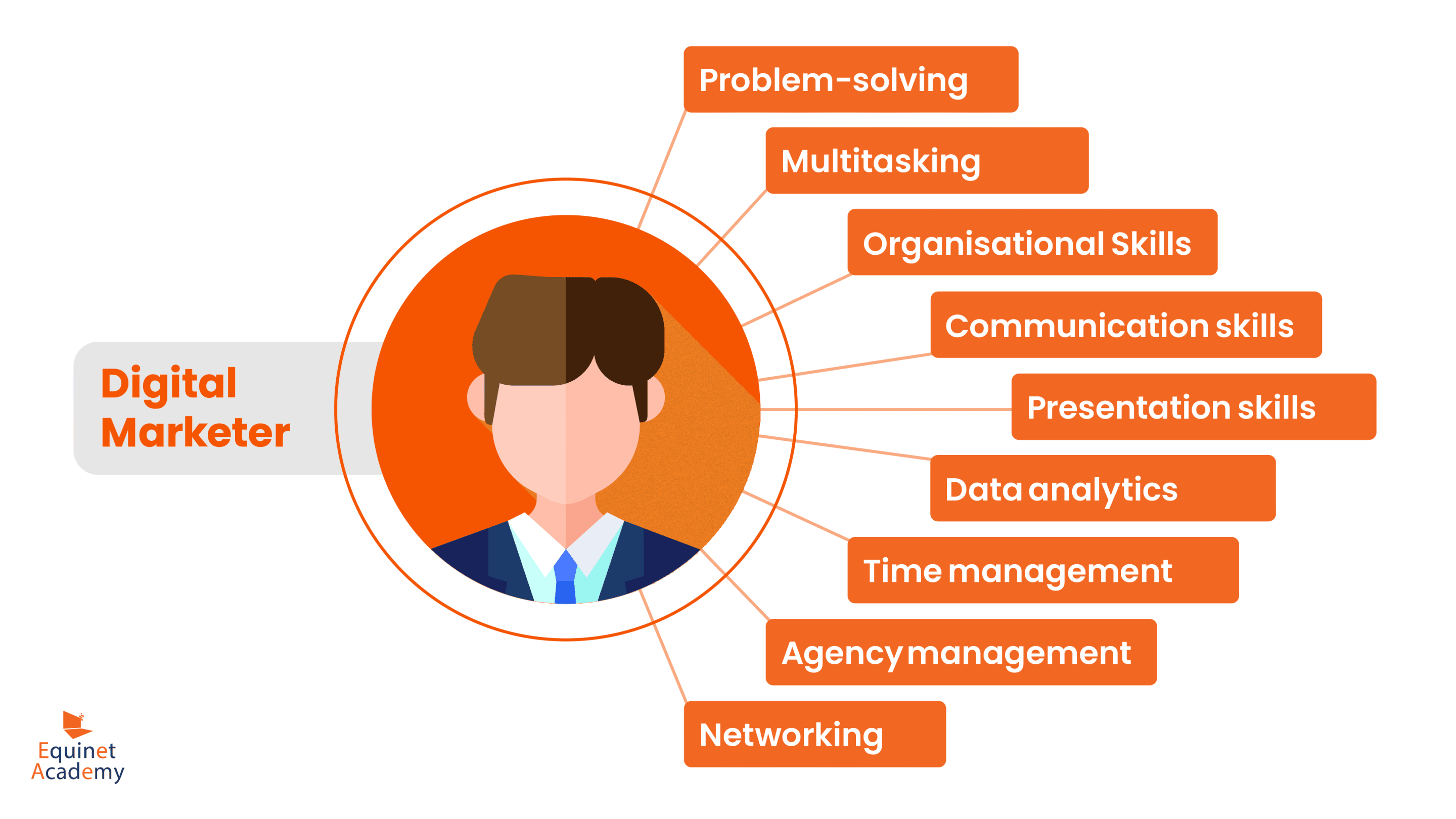
For an exhaustive list of digital marketing skills, give this article a read.
Many times, these skills are sharpened or picked up while you’re on the job. This brings us to the steps you can take to begin a digital marketing career.
With the vast array of skills – technical, soft, and hard – you’re required to possess for a successful digital marketing career, one of the best ways to get ahead is to attend courses, workshops, and programmes dedicated to imparting this knowledge to you.
Digital marketing courses are good for both beginners in the field of digital marketing as well as professionals looking to upskill and keep up to date with the latest developments in digital marketing.
But with so many digital marketing courses in Singapore, how should you go about picking the right one for yourself?
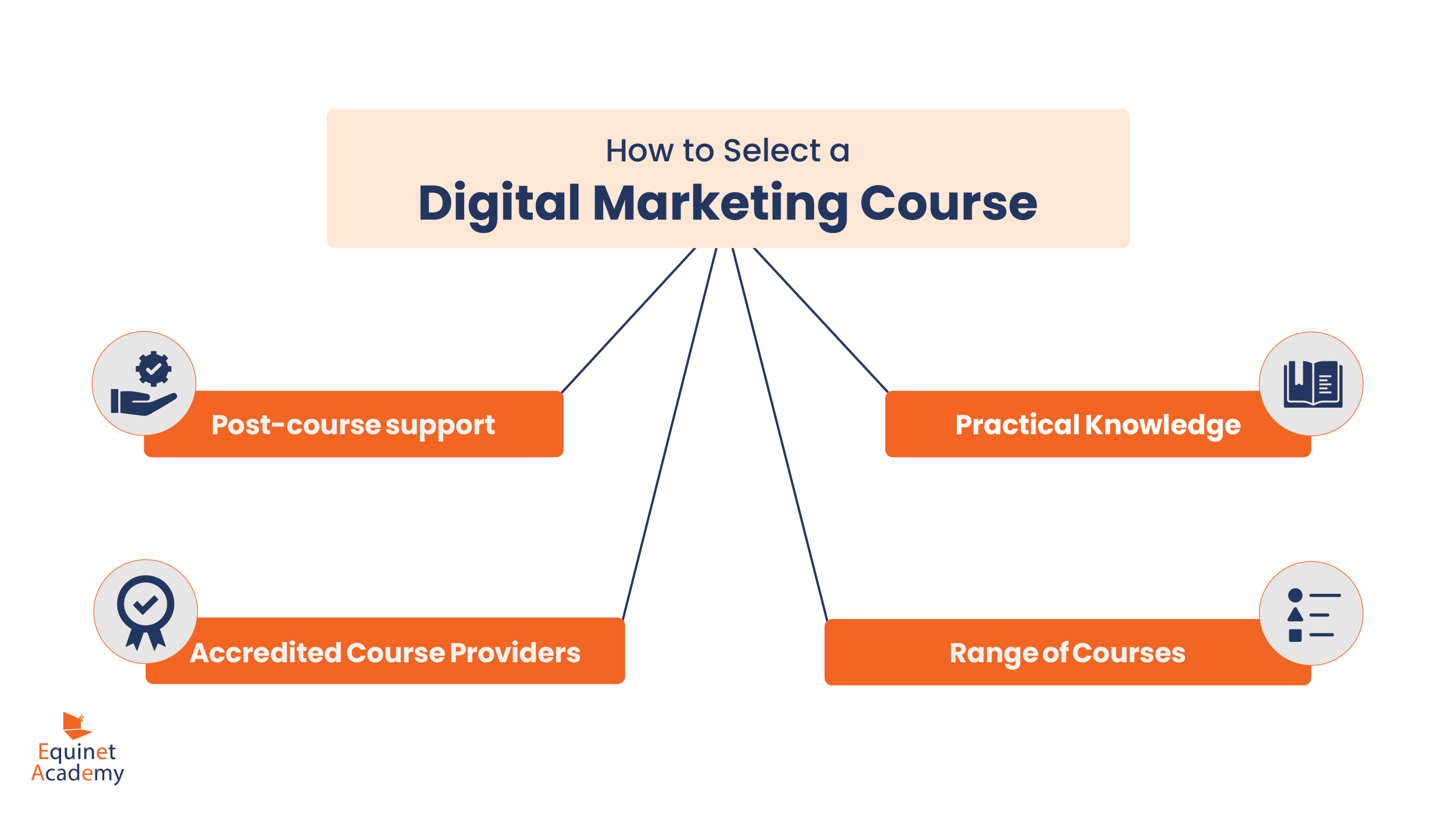
Due to the high demand for digital marketing training, the Internet is full of options for short-term courses in the field. The question is then how to select the best digital marketing course in Singapore that offers recognised certification and hands-on exposure. Some of the important criteria you can look for while selecting a digital marketing course in Singapore are as follows:
The course should offer practical knowledge of digital marketing skills through opportunities to work on tools, applications, and real cases. Look for courses structured to offer a good blend of conceptual and practical knowledge of digital marketing skills.
After completing the course, you should have a strong working knowledge of digital marketing channels and tools, which will put you a step ahead in your digital marketing career.
It’s important to look for a digital marketing course provider in Singapore with a good range of courses, both foundational and advanced. This allows you to progress smoothly if you choose to level up after taking the foundational courses.
While foundational courses are recommended for beginners, you’ll be surprised that many times, seasoned professionals far ahead in their digital marketing career benefit a great deal from the refreshers and foundational courses provided as well.
The number of digital marketing course providers in Singapore is growing day by day. However, it is advisable to select one that has proper recognition from government bodies and has been in the space of digital marketing training for some time.
In Singapore, learners are encouraged to attend courses by providers that are accredited by SkillsFuture Singapore and are an Approved Training Organisation (ATO). Apart from this, the course provider should have a proper assessment plan and offer a genuine certificate to all those who complete the course.
Digital marketing is a vast subject, and you will need resources and reference materials even after you finish the course. Look for digital marketing course providers in Singapore that offer post-course consultation to clear your doubts and fill in gaps if any. It also helps if the course trainers are seasoned industry professionals who have current, hands-on work experience.
If you’re in the market for a digital marketing course in Singapore, feel free to check out our range of courses here. Not sure where to start? Fret not, we have a course selector tool to guide you in the right direction.
Of course, getting certified is only the first step. Digital marketing roles require some level of real-world experience. If you’re willing to get your hands dirty, there are countless opportunities available in the job market today.
One of the best ways to get started in a digital marketing career with no experience is an internship.
This can be done while pursuing a digital marketing course or after completing it, depending on the course duration. An internship offers on-the-job training and the mentorship of experts that will give you confidence as a digital marketer.
As a digital marketing intern, you will get hands-on experience in managing conversations on social media, creating and publishing blogs, performing keyword research, managing content, social media calendars, and other day-to-day marketing activities.
Freelancing is another effective way to build experience and expand your digital portfolio. This could mean going on platforms like Fiverr or scouring through job portals to look for freelance opportunities.
Don’t be afraid to work for a bit less at the start of your digital marketing career. Remember, at this point, you’re trying to get a couple of projects under your belt to eventually secure a full-time role.
Simultaneously, submit your CV to various job portals and be on the lookout for suitable vacancies. If you’d like some tips on how to build a great digital marketing resume, give this article a read. Ensure your LinkedIn profile is updated regularly as well.
Pursuing a career in digital marketing can be both fulfilling and financially rewarding. Getting started in a digital marketing career is now easier than ever with the abundance of courses available. Choosing the right digital marketing course provider is crucial; invest time in research to ensure your decision aligns with your goals.
At Equinet Academy, we have digital marketing consultants who will help you choose the right course depending on your background and experience. Feel free to take a look at the range of courses we provide, and please don’t hesitate to contact us if you need help or advice.
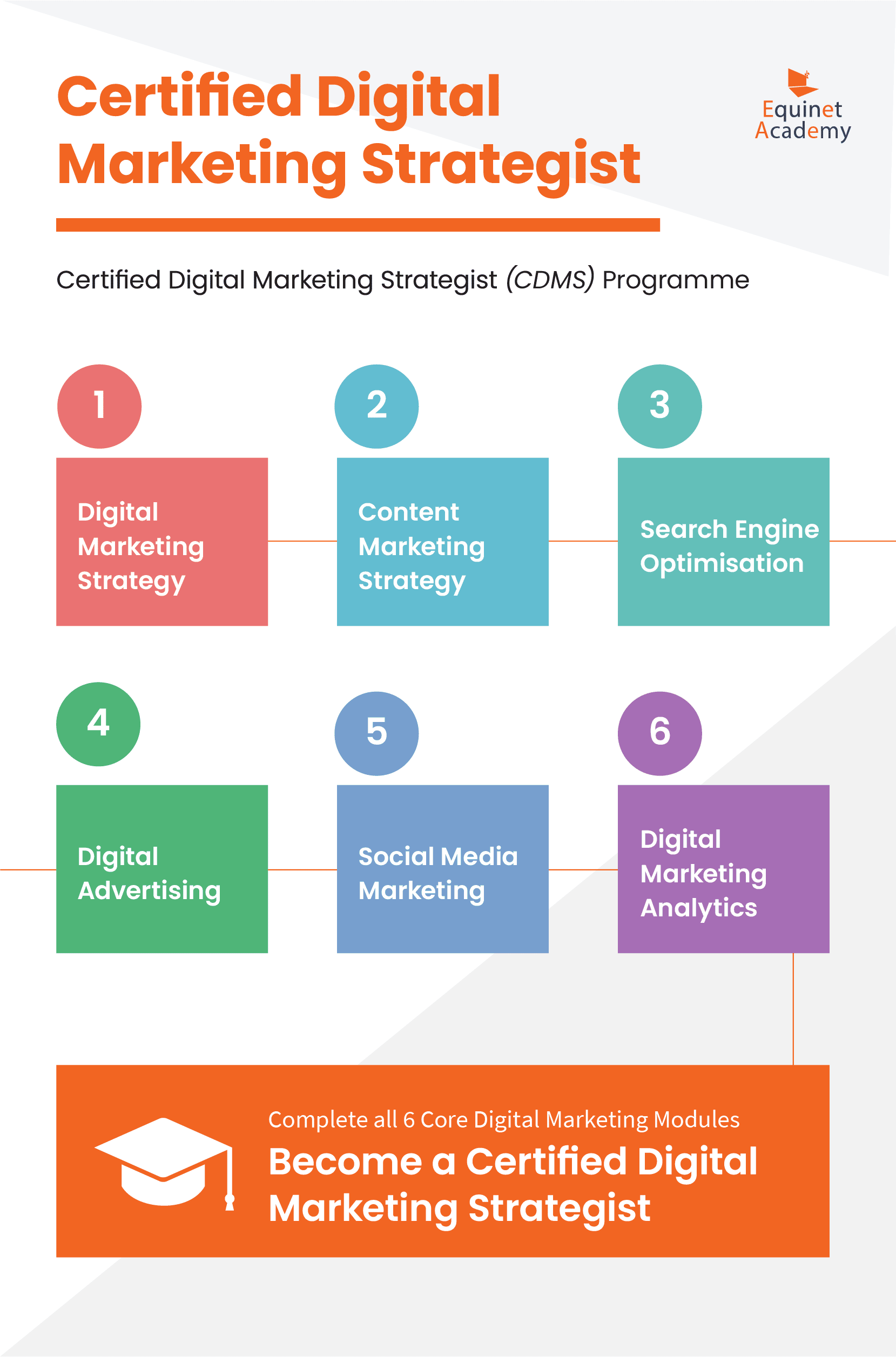
Equinet Academy’s CDMS Programme is perfect for beginners and intermediate learners.

Article Written By
Article Written By
Receive the latest blog articles right into your inbox.
Reader Interactions